Sketch Your Day, Save Your Energy
We’re diving into storyboarding routines to minimize decision fatigue, transforming mornings, work sessions, and evenings into clear, visual sequences that guide action without constant internal debate. Expect practical steps, vivid examples, and flexible approaches that preserve creativity while reducing mental taxation. By the end, you’ll have a simple way to decide once, act smoothly, and recover energy for what truly matters.
Why Your Brain Loves Pre-Decided Days
Decision fatigue quietly erodes willpower, nudging you toward procrastination, impulse choices, and cognitive overload by afternoon. Storyboarding compresses dozens of micro-choices into visual panels, freeing working memory and reducing switch costs. Instead of negotiating every step, you follow a designed flow that supports executive function, stress regulation, and calm. This is not rigid control; it is a compassionate cue system that lightens mental load while keeping options open.
Designing Your Daily Panels
Start with moments that repeatedly stall you—mornings, project transitions, and shutdowns. Convert each into a short storyboard of three to seven panels that communicate action with minimal text or debate. Use verbs, time anchors, and environment cues. Keep visuals simple enough to scan under stress. Aim for frictionless clarity: if a panel makes you think hard, simplify it. Iterate until your board nudges you forward even on lousy days.
Frame Count and Flow
Fewer frames create stronger momentum. Most routines thrive between five and nine panels, enough to capture essentials without micromanaging. Sequence actions by natural energy curves: gentle starts, ramping focus, deliberate cooldowns. Insert checkpoints that ask ready to proceed, not Should I proceed? Close loops visibly—finish markers and check arcs help your brain enjoy completion. The goal is smooth glide from one frame to the next, with minimal reconsideration.
Icons, Color, and Micro-Cues
Visual language matters. Use consistent icons for action types—movement, review, decision gate, handoff. Color-code by energy demand to prevent clumping high-load tasks together. Add micro-cues like water glass drawings near focus blocks, or a tiny sun to signal light exposure. These cues bypass verbal rumination and trigger immediate action. Your board should read like a comic strip your future self intuitively understands when tired or distracted.
Connecting Routines with Context Triggers
Tie each storyboard to a context switch you already experience: opening your laptop, placing keys on a tray, sitting at your desk, or turning off the stove. Build If this, then that transitions: if I place my mug down, then panel one begins. The environment becomes your prompt, sparing you from initiating momentum. Fewer start-up negotiations means less friction, better adherence, and kinder mornings when willpower feels thin.
Storyboarding for Focused Workdays
Workdays collapse under micro-decisions—when to check messages, how to start deep work, when to stop. Build boards that schedule your attention, not just your tasks. Use panels for inbox triage windows, meeting prep rituals, deep work protection, and deliberate shutdown. Pre-deciding reduces context switching and protects cognitive bandwidth. The payoff is sustained attention, calmer pacing, and fewer end-of-day regrets about misplaced energy and scattered focus.
Meetings That Don’t Drain You
Create a three-panel runway: clarify purpose and success criteria, prepare questions and decisions, confirm next steps template. Add a single post-meeting panel to log actions before reopening the inbox. This stops the common slump where meetings multiply decisions afterward. With a board, you move in clean arcs: prepare with intention, participate with clarity, exit with commitments captured, energy preserved. Meetings become structured exchanges rather than unpredictable drains.

Deep Work Without Negotiation
Protect a block by storyboarding a ritual: one-minute breath, silence notifications, open only the needed file, set a visible timer, begin with a tiny starter task. Put a midway check panel for refocus, then a closing capture to record next steps. Because you follow panels, you spend zero energy bargaining about whether to start. The board engineers entry, sustains attention, and ends cleanly without emotional residue.
Handovers and Shutdown Scripts
End-of-day wobble breeds late-night anxiety. Use a shutdown storyboard: park unfinished tasks in a tomorrow list, send handover notes, clear desktop, set first panel for the morning, and physically close the workstation. Add a gratitude micro-panel to cement closure. This script prevents mental carryover, protects sleep, and shortens next-day startup. The calm you feel isn’t luck; it’s the design of consistent, compassionate endings that respect your future self.
Home, Family, and Personal Care
Design a wind-down board that gradually lowers stimulation: dim lights, tech-off checkpoint, light tidying sprint, prepare tomorrow’s bag, relaxing activity, brief reflection, then bedtime ritual. Visual pacing matters—space panels wider as the evening slows. Include a contingency branch for late nights to avoid all-or-nothing thinking. When the sequence is visible, families stop arguing about what’s next and instead follow a shared glidepath toward rest.
Negotiations shrink when the plan lives outside anyone’s head. Co-create a visible board for recurring friction points—mornings out the door, Sunday resets, grocery runs. Alternate panels assign ownership with clarity, not micromanagement. Add an edit corner for weekly tweaks so the system feels alive, not imposed. Shared boards reduce resentment, create reliability, and turn coordination into teamwork anchored by predictable cues and compassion.
When choices feel indulgent, we avoid them until burnout arrives. Build a self-care storyboard that removes dithering: short walk, hydration, micro-journal, stretch, music, and a playful micro-challenge. Keep it brief and repeatable. By pre-deciding a tiny nourishing circuit, you skip bargaining about worthiness. The board reframes care as maintenance for performance and kindness, not a reward. You finish lighter, recharged, and more present for everything else.
Tools, Templates, and Analog Alternatives
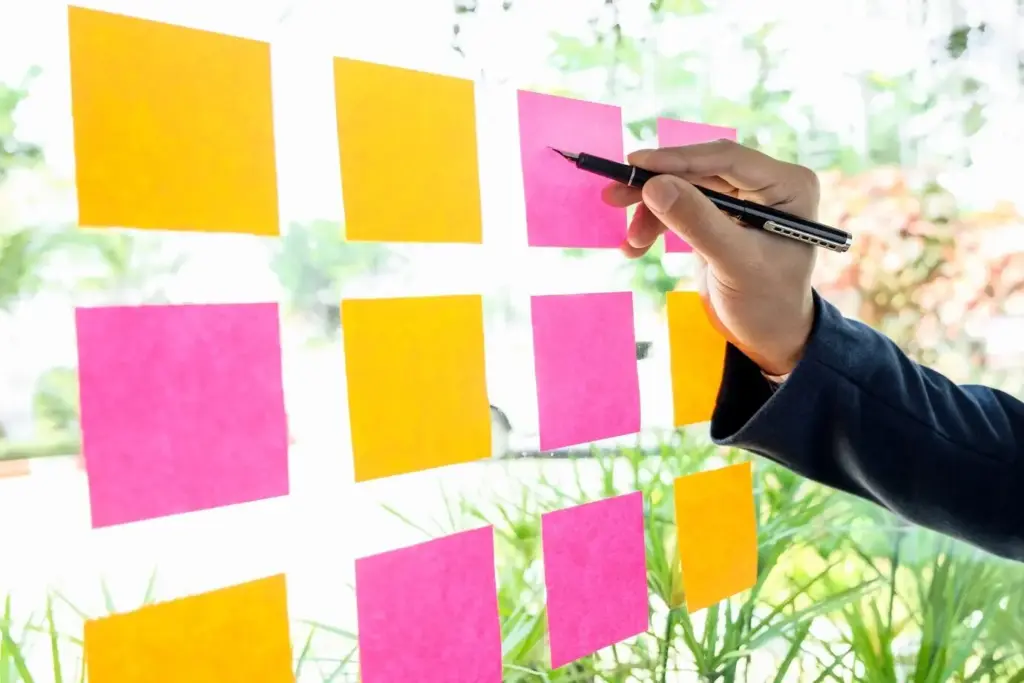
Use tools that vanish into the background. Analog options—index cards, whiteboards, sticky notes—win for speed and visibility. Digital tools shine for portability and automation. Start lo-fi to discover what actually works, then add tech sparingly. Create reusable templates for mornings, kickoff meetings, and weekly reviews. The best tool is the one you’ll glance at during fatigue and effortlessly follow without renegotiating every next move.
Refining the System and Staying Flexible
Weekly Retrospectives in Ten Minutes
Schedule a short review: Which panels felt sticky? Where did I renegotiate? What small change would make the next step obvious? Replace or merge confusing frames, and remove vanity steps that look neat but add friction. Capture one improvement per board. Ten deliberate minutes keep the system evolving, preventing stagnation and ensuring your routines stay humane, resilient, and aligned with your current season of life.
When Life Changes Overnight
Illness, new roles, or travel can shatter familiar cues. Keep emergency boards: a minimal morning, a simplified work block, and a compassionate shutdown that protects sleep. These versions acknowledge reduced capacity while preserving structure. Think scaffolding, not shortcuts. When stability returns, scale up gradually, reintroducing panels that add value. Your resilience grows not from toughness, but from adaptable flows that meet reality without drama.
Invite Feedback and Build a Community
Share a photo of your board, ask for suggestions, and swap templates with readers facing similar challenges. Collective iteration accelerates learning and keeps motivation high. Comment with one routine you want to storyboard this week, or subscribe for monthly template drops. Your insights help others decide less and live better—together we refine flows that respect energy, encourage calm, and free attention for meaningful progress.